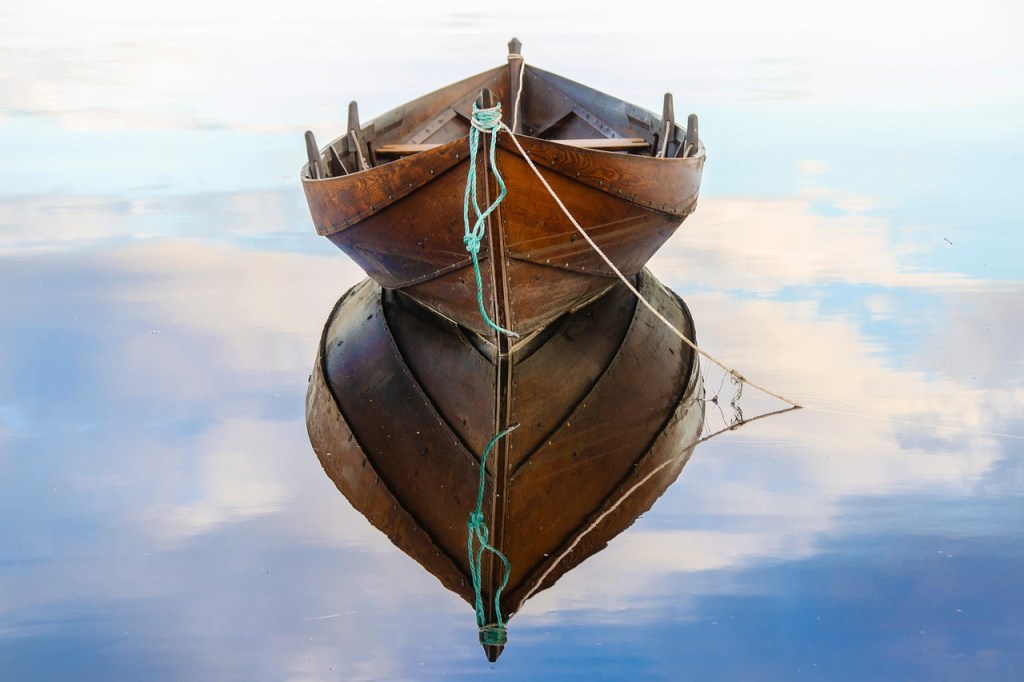
Free use image by Tom Dansken on Pixabay
When You Can’t Find the Story (Lost at Sea)
How long has it been since you encountered a moment in your writing when you were simply unsure of how to continue? You could not see land and you were alone in a tiny boat.
The Basic Elements of a Story
Most times when I’m writing I’ll have a good sense of who is involved. I might be in the weeds of a piece of fiction with fairly well-developed characters (these things improve over time). I could just as likely be writing about things that actually happened, also with my best attempt at fully developed people.
I’ll know where the story is set and feel strongly about it. Sometimes, to be honest, it seems like the setting is every bit as strong a character as any other part of the narrative.
Before I’ll begin to write, I’ll envision the makings of a juicy conflict. That’s generally the main reason I write. I seek to better understand the inner workings of situations and people who cause grief or joy to others and themselves.
A Plan Forward
When I set out on any journey, I need a map (GPS doesn’t change that). Likewise, when I start a writing project, I need an outline. Although it rarely takes me where I thought I wanted to go, the idea that I can see the way forward to the end is comforting in the moments when I do not know how to continue and it usually gives me the optimism to start strong.
But sooner or later, no matter what I am writing, I’ll lose my way in the deeper waters. I’ll be bouncing around on the waves, watching seals and gulls, and realize suddenly that there is no land in sight. In my little boat on the big sea, I’ll have no idea where I’m going.
It happened only last week when I was working on a personal essay. You know, that horrific sense of despair, when you daze with disbelief and start telling yourself you will never find the direction you need to navigate the endless sea.
Follow the Yearning Instead
In such moments, making it to safe harbour is within my skill set, although I tend to forget I know how to do this. All I need is to “follow the yearning through the senses” and I will find my way to a meaningful story. Full credit to Robert Olen Butler, author of From Where You Dream, for this powerful piece of writing advice. If you haven’t read this book, I highly recommend it.
Robert Olen Butler suggests that yearning is the compass by which a story finds its direction. If you haven’t explored this idea, why not give it a try, either the next time you are lost at sea, or perhaps sooner to avoid getting lost in the first place. (Such sage advice, you’d think I might follow it.)
Forget What You Think You Know
It’s an uncomfortable notion—to forget what you had planned and to instead trust what you feel. We don’t usually put so much deliberate trust in emotions, thinking they are transitory and frequently misguided and sometimes even dangerous. What if the opposite is true?
Slowly, I am discovering that emotions are not only useful in understanding myself and the world I live in; they guide story. We don’t fall in love with plots or personalities exactly. We fall in love with the character’s yearning, the thing they do not have, what they dream for, who they might become.
Sometimes we catch that yearning and it lives in our own hearts until the narrative plays out. Afterwards, we can be transformed. So yeah, emotions are worth attending.
The Power of Empathy
And what does this involve, the attending? How does it happen? First, I need to uncover what the protagonist really wants, the deepest and darkest secret they keep even from themself. Free writing can help bring such secrets to the surface. The faster I write, the less likely I am to get in the way of truth.
Making space in my imagination and patiently waiting for inspiration helps too. The best narratives play out not only at the keyboard, but all day long. While I am doing other things, these stories stew inside me.
This is possible because of empathy. It’s not enough to analyze something outside of myself and call that yearning. I need to ache in my own belly, even when that is for someone else’s experiences of things I have never done.
Felt in the Body
It’s helpful once you know what the central yearning is, to give it something to do. When I was stuck in a personal essay I was writing last week, I set aside my outline and chose instead to follow a stretch of highway in the Rocky Mountains that I have driven countless times. I was amazed at how useful that simple decision was.
Then, I concentrated on what I saw, heard, smelt, tasted and touched as I experienced the yearning while imagining myself driving that highway. Suddenly, what seemed impossible no longer was.

 Debbie Bateman